In large-scale Integrated Reception Systems (IRS), delivering a balanced and compliant television and satellite signal to multiple dwellings requires precise network design. While engineers rigorously calculate overall link budgets and signal attenuation, RF Slope (often referred to as tilt) remains a critical factor that can severely compromise signal quality at the subscriber outlet if left unaddressed.
With the industry transition toward Wideband satellite technology within communal networks, understanding and mitigating this phenomenon is now more important than ever.
What is RF Slope?
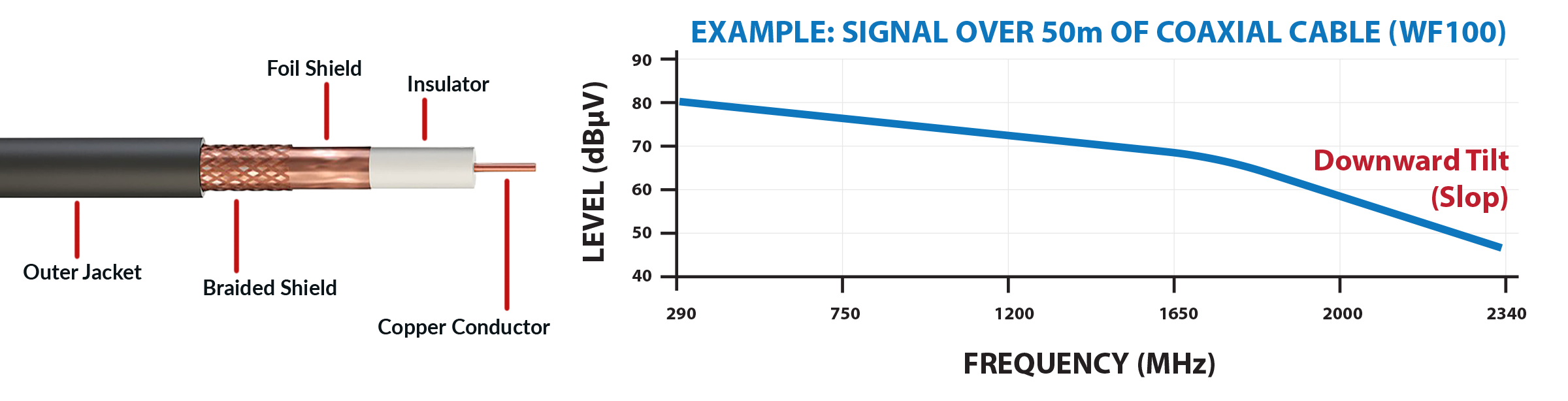
RF Slope is the uneven attenuation of signal strength across a given frequency spectrum as it propagates through a coaxial cable infrastructure.
Coaxial cable does not exhibit a linear insertion loss across all frequencies. High-frequency signals encounter significantly greater resistance and attenuation than lower-frequency signals over identical distances.
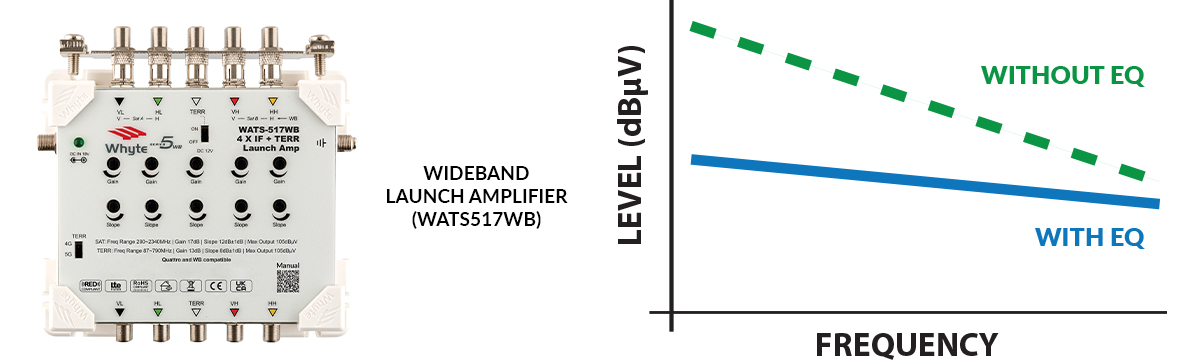
The Technical Reality: When viewed on a spectrum analyser, the signal profile does not present as a flat response. Instead, it exhibits a distinct downward tilt, where high frequencies arrive at the termination point significantly weaker than the lower frequencies.
The Wideband Challenge: Aggressive Tilt Profiles
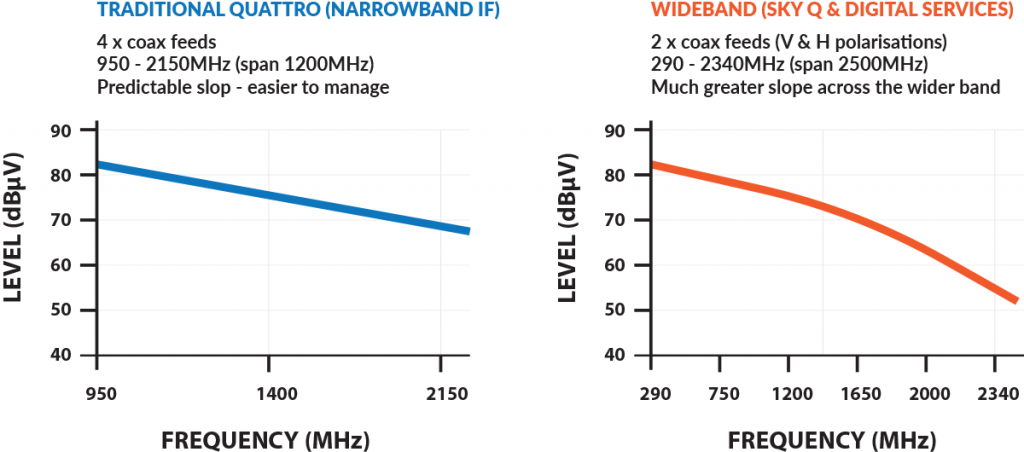
In traditional IRS networks utilising Quattro LNBs, satellite signals are segregated into four separate coaxial feeds, each operating within a relatively narrow intermediate frequency (IF) band of 950MHz to 2150MHz. Because the frequency span is limited to 1200MHz, the resulting slope is predictable and comparatively straightforward to manage. Especially over good quality coaxial cable like WF100.
Conversely, modern IRS architectures deployed for Sky Q and standard digital services frequently rely on Wideband technology. Wideband combines the entire satellite spectrum into just two coaxial cables (Vertical and Horizontal polarisations) by substantially widening the frequency range from 290MHz to 2340MHz.
Expanding the bandwidth span to 2050MHz introduces more RF slope:
The 290MHz signals pass through the coaxial infrastructure with minimal attenuation.
The 2340MHz signals experience more attenuation over the same cable run.
Network Degradation and System Effects
To comply with industry standards, signal levels at the user outlet must sit within strict power and quality thresholds.
Excessive RF slope disrupts this equilibrium in two distinct ways:
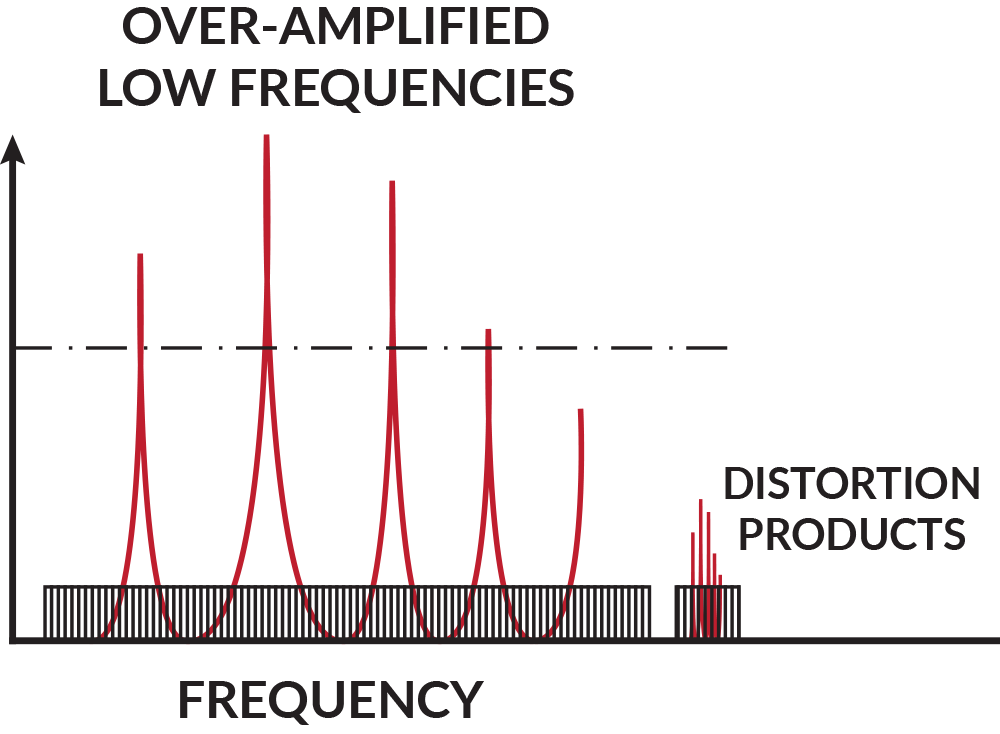
Intermodulation Distortion:
Attempting to compensate for weak high-frequency transponders by increasing the gain on a standard launch amplifier will simultaneously over-amplify the lower 290MHz frequencies. There is a risk of overdriving the active equipment, introducing intermodulation products and harmonic distortion across the entire distribution network.
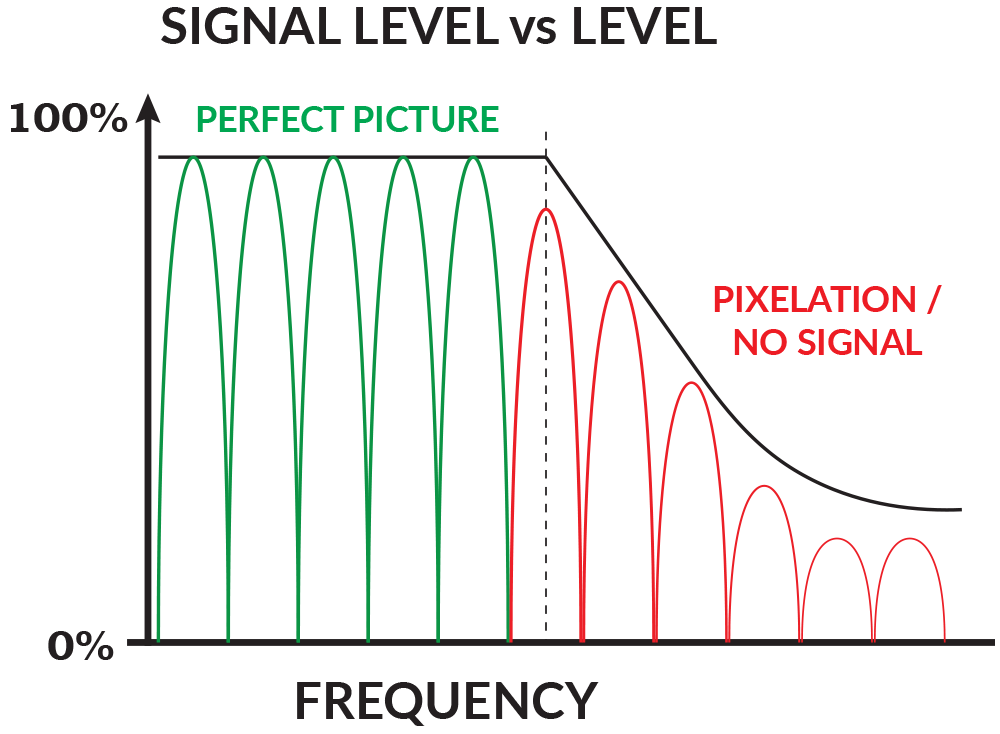
The Digital Cliff Effect:
Conversely, failing to compensate for high-frequency attenuation causes the upper transponders to fall below the tuner’s minimum operational threshold. Due to the nature of digital transmissions, this results in the “digital cliff effect” where signal quality degrades abruptly from a perfect picture to total pixelation or complete loss of service. This can be infuriating for end users as some services work and some do not.
Engineering Mitigation and Equalisation Techniques
To achieve a flat frequency response across extensive communal networks, system designers employ several core engineering practices:
Wideband Slope Equalisation (Tilt Control):
Modern launch amplifiers incorporate adjustable slope equalisers. These circuits deliberately introduce insertion loss at the lower frequencies 290MHz range to mirror the natural cable loss, thereby flattening the overall response.
Pre-Emphasis:
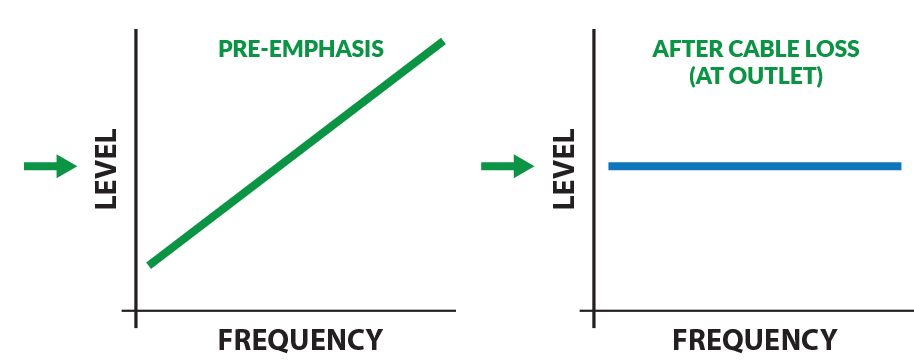
Designers frequently configure the headend equipment to introduce an inverted slope (pre-emphasis) at the launch point. By over-amplifying the higher frequencies prior to distribution, the signal naturally flattens out as it encounters cable resistance enroute to the furthest network nodes.
Whyte Fibre Optic IRS (FIRS):
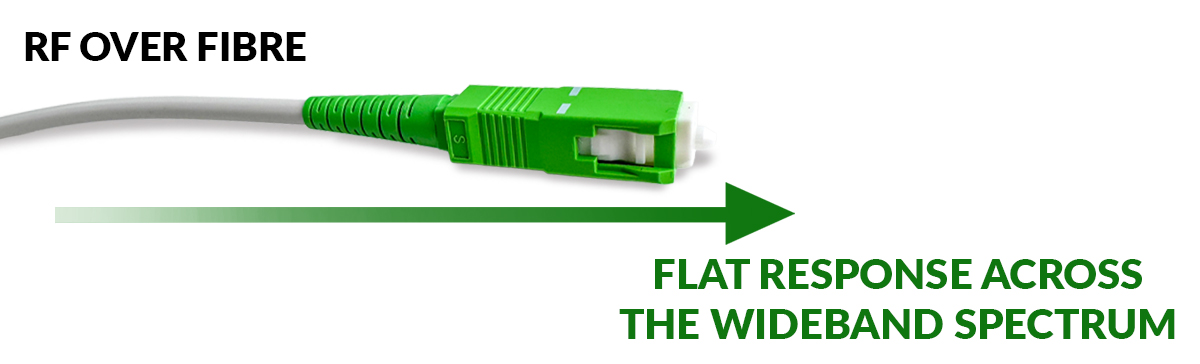
Optical fibre cable experiences negligible attenuation and zero RF slope across these bandwidths, effectively bypassing the physical limitations of copper. The RF source is effectively replicated across your network.
Whyte Solution for modern IRS
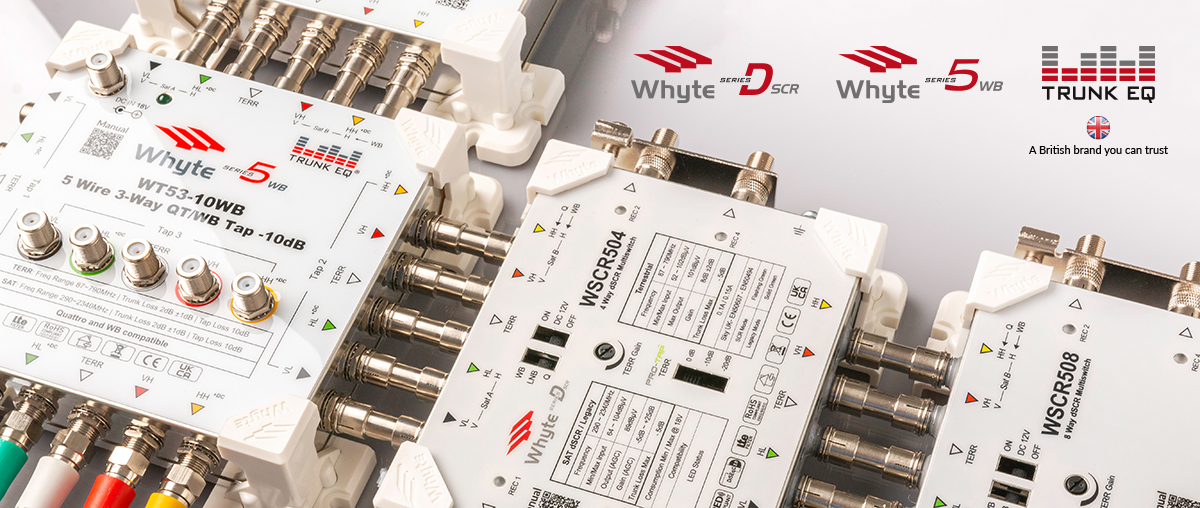
Whyte Trunk EQ range – precision equalisation for Wideband IRS systems
RF Slope is an inherent physical characteristic of coaxial distribution, and the widespread adoption of Wideband satellite delivery has significantly amplified its impact. By anticipating high-frequency roll-off during the schematic design phase and utilising wideband compatible equalisation Whyte Trunk EQ equipment, installers can deliver robust, future-proof IRS networks that meet stringent UK reception standards.